




Want to find more IVF Articles?
All Articles


Most people don’t search “what is IVF” just to get a definition.
They search because they’re trying to understand what the experience is actually going to be like because its something they’re considering.
How complicated is it?
How painful—or manageable—does it feel?
How much time does it really take?
And how does it fit into real life, beyond the numbers and medical terms?
IVF (in vitro fertilization) is a fertility treatment in which eggs are retrieved from the ovaries, fertilized with sperm in a laboratory, and then either transferred to the uterus or frozen for future use. While every fertility clinic follows its own treatment protocol, most IVF cycles follow the same general sequence of medications, monitoring appointments, procedures, and decisions.
This guide explains what the IVF process actually looks like in real life—from the first fertility injections and monitoring appointments to egg retrieval, embryo development, and embryo transfer. Along the way, we'll also explore the practical and emotional realities of treatment so you know what to expect at each stage.
Typical timeline: Several weeks (not including preparation before treatment begins)
Main stages
IVF (in vitro fertilization) is a fertility treatment in which eggs are retrieved from the ovaries, fertilized with sperm in a laboratory, and then either transferred to the uterus or frozen for future use.
Unlike trying to conceive naturally, IVF is a highly structured and time-sensitive process. Each stage builds on the one before it, with medications, monitoring appointments, and procedures carefully timed to give treatment the best chance of success. Much of this takes place over just a few weeks.
For many patients, IVF isn't just a medical treatment—it becomes part of everyday life. It can affect work schedules, travel plans, relationships, sleep, and emotional bandwidth, which is why understanding what to expect can make the process feel more manageable.
Every IVF journey is unique. Your treatment plan may differ based on factors like your age, diagnosis, medical history, lab results, and how your body responds to medication. While no two IVF cycles are exactly alike, most follow the same general sequence of steps.
Understanding that sequence can make the process feel much less overwhelming. Knowing what's coming next—and why each step matters—helps turn a complex treatment plan into something that's easier to follow.
Below is a step-by-step overview of a typical IVF cycle, from ovarian stimulation through embryo transfer, with practical context to help you understand what each stage is like in real life.

IVF typically begins with ovarian stimulation, a phase in which daily hormone injections encourage the ovaries to mature multiple eggs instead of the single egg released during a typical menstrual cycle. You may hear this stage referred to as “stimulation” or simply “stims.”
During this phase:
For many patients, this is the moment IVF starts to feel real. Holding a syringe for the first time can feel intimidating, especially when the medications are expensive, the timing matters, and everything feels new. Those feelings are common—and with practice, many patients become more confident.
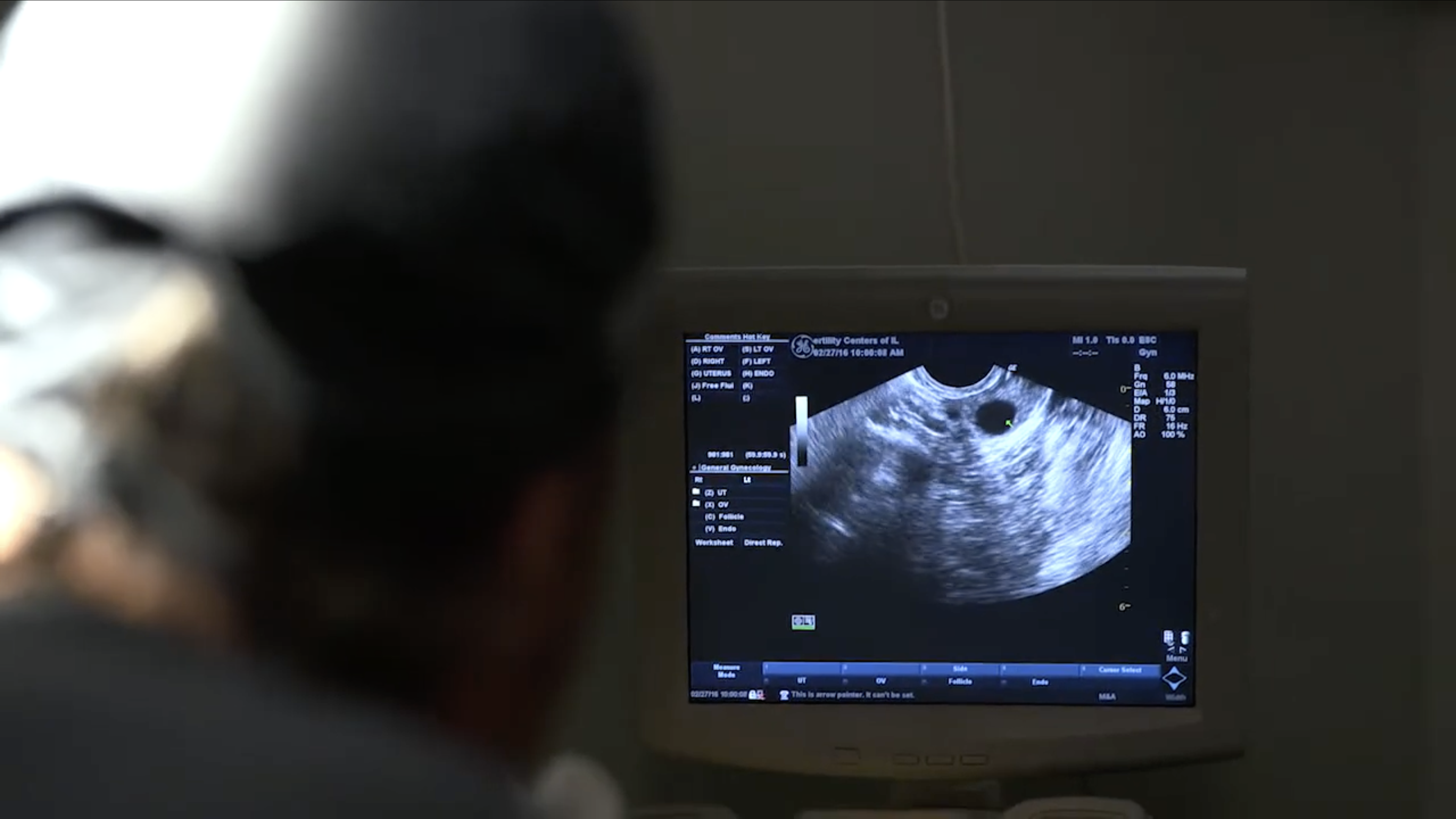
Throughout ovarian stimulation, your clinic will monitor your progress through:
These appointments show how your follicles are developing and help your clinic determine whether your medications or timing need to be adjusted. Monitoring can feel frequent and disruptive, especially for patients balancing work or family responsibilities.
Once your follicles reach the appropriate stage, your clinic will tell you when to take a trigger injection. This injection helps prepare the eggs for retrieval and is one of the most time-sensitive steps in the IVF process.
The trigger injection must be administered at a very specific time. Taking it too early or too late can affect the timing of your egg retrieval. Your clinic will typically give you a very specific time to administer the trigger injection, sometimes down to the exact minute.
Egg retrieval is a short outpatient procedure performed at your fertility clinic, typically under sedation. Eggs are collected directly from the ovaries, and most patients go home the same day.
Physical recovery is usually manageable. Emotionally, many patients describe retrieval as a turning point—everything leading up to this moment has been preparation.
After retrieval:
This stage often involves waiting—for updates on embryo development and conversations about the next steps in your treatment.
An embryo transfer is generally a simpler procedure than egg retrieval, but it may still involve medications, including progesterone injections to support implantation.
Some patients move directly into an embryo transfer, while others pause and plan for a future cycle.
Physically, IVF experiences vary. Some injections sting, some cause temporary soreness or bruising, and it's common to experience side effects such as bloating or fatigue.
For many patients, however, the emotional and mental demands of IVF are more challenging than the physical discomfort.
How hard is this going to be to manage day after day?
The intensity of IVF often comes from:
That stress is completely understandable—and it's something many patients don't fully anticipate until they're experiencing it themselves.
The injections themselves are where many patients become the most hands-on in their care.
They can be:
For many people, though, the challenge isn't the injection itself.
It's the responsibility.
Patients suddenly become responsible for preparing medications correctly, keeping track of changing instructions, remembering exact timing, and administering injections with confidence—all while managing the emotional weight of treatment.
That's why many patients describe this stage as feeling mentally exhausting, even if the injections themselves become easier with practice.
By this point in the IVF journey, many patients are looking for a little extra reassurance.
Some patients want help with their very first injection. Others feel comfortable administering most medications themselves but prefer an experienced nurse for a time-sensitive trigger injection or progesterone injection.
For patients who want that additional support, trained fertility nurses can administer injections at home while following the medication protocol provided by the patient's fertility clinic.

The goal isn't to take control away from patients. It's to:
Support can be especially valuable for people balancing work, travel, childcare, or unpredictable schedules during treatment.
IVF is a medical process, but it's also a deeply personal one. Every treatment plan is different, every clinic follows its own protocol, and every patient experiences the journey in their own way.
While no article can prepare you for every moment, understanding the IVF process can replace uncertainty with confidence. Knowing what comes next—and recognizing that it's normal to have questions along the way—can make the experience feel much more manageable.
Whether you administer every injection yourself or choose to have extra support, the goal is the same: helping you move through treatment with confidence, one step at a time. There isn't one "right" way to move through IVF—only the approach that gives you the confidence to follow your treatment plan successfully.
Real-Life Fertility Guidance—Clear, Practical Articles by Experts and Partners